
on seeing and being seen
plus: vote for my poem in Arc's Poem of the Year Award!

Apartment buildings are sites of strange and vivid intimacy. I know that one of my neighbours drinks a smoothie every weekday at 7am, thanks to the thunderous alarm clock of her blender through my bedroom wall. And I can always tell when another neighbour has finished a work contract: his pink strobe light starts swivelling, electronica pulses once again along the floor.
Last fall, finishing a contract of my own, I had to leave the house right as my neighbour’s blender roared to life. In an effort to preserve a small dose of morning reverie, I’d stumble out of bed, make coffee, and take it to my favourite spot by the window, where I’d watch the indigo sky diluting into blue.
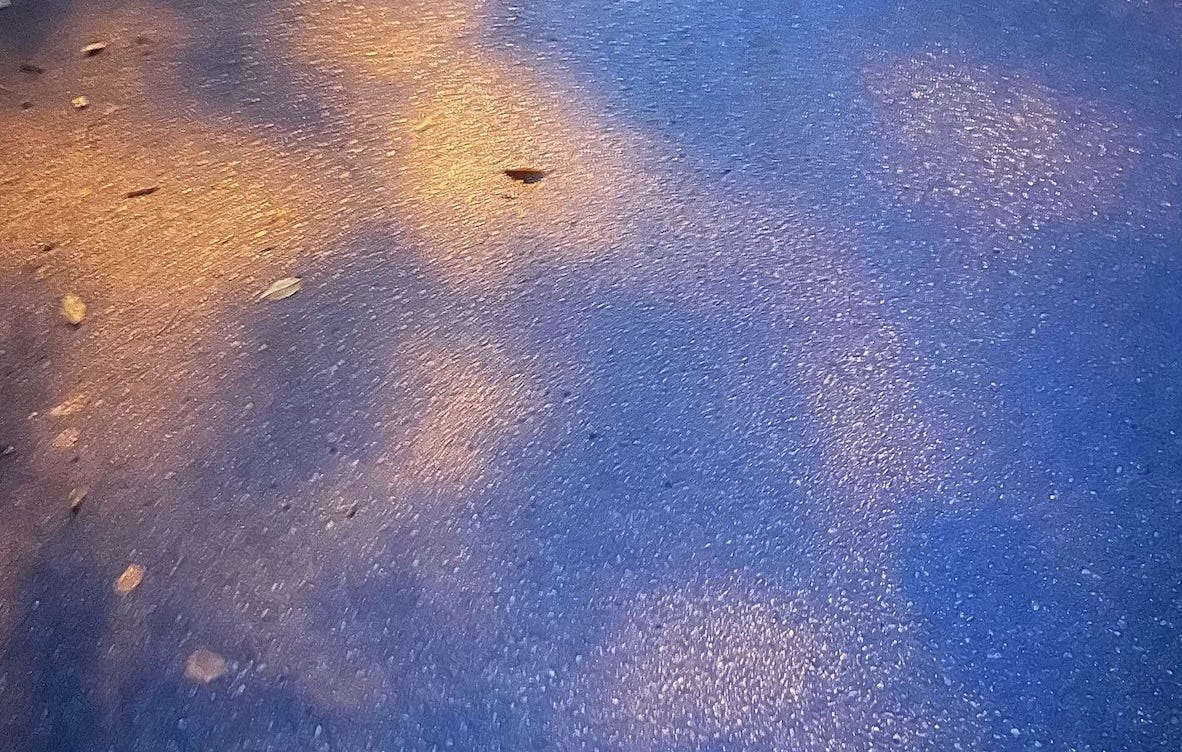
I wasn’t alone, or not exactly. I shared that indigo hour with a stranger, a woman whose balcony sits at eye level with my window. The moment I took up my station on the couch, she’d emerge in her robe, light a cigarette, then spend the next ten minutes scrolling on her phone.
On the rare mornings she didn’t emerge, I’d worry: Is she sick? Did she move? I’d leave for work feeling off-kilter, incomplete, as if I’d forgotten to brush my teeth.
Sometimes, while she scrolled, I’d open my notebook and scribble a few short, inchoate lines. Mostly I’d reach for Elena Ferrante’s Neapolitan Novels, a series I was devouring for the second time.
Translated from Italian by Ann Goldstein, the novels follow two women living in a working-class neighborhood in Naples: Elena Greco, the narrator, and Lila Cerullo, her wild, ungovernable friend. They meet as children, immediately forging an intense, tumultuous friendship that will carry them across sixty years.
On both readings, I felt like I was riding a rollercoaster through the twists and turns of my own psyche. Riveted to my seat, I throttled along currents of longing, fury, regret, hope—some instantly recognizable, others revealing themselves to me with the stomach-churning force of a hairpin bend.
Once again, I wasn’t alone; other people have told me they too believe the novels were written with them in mind.
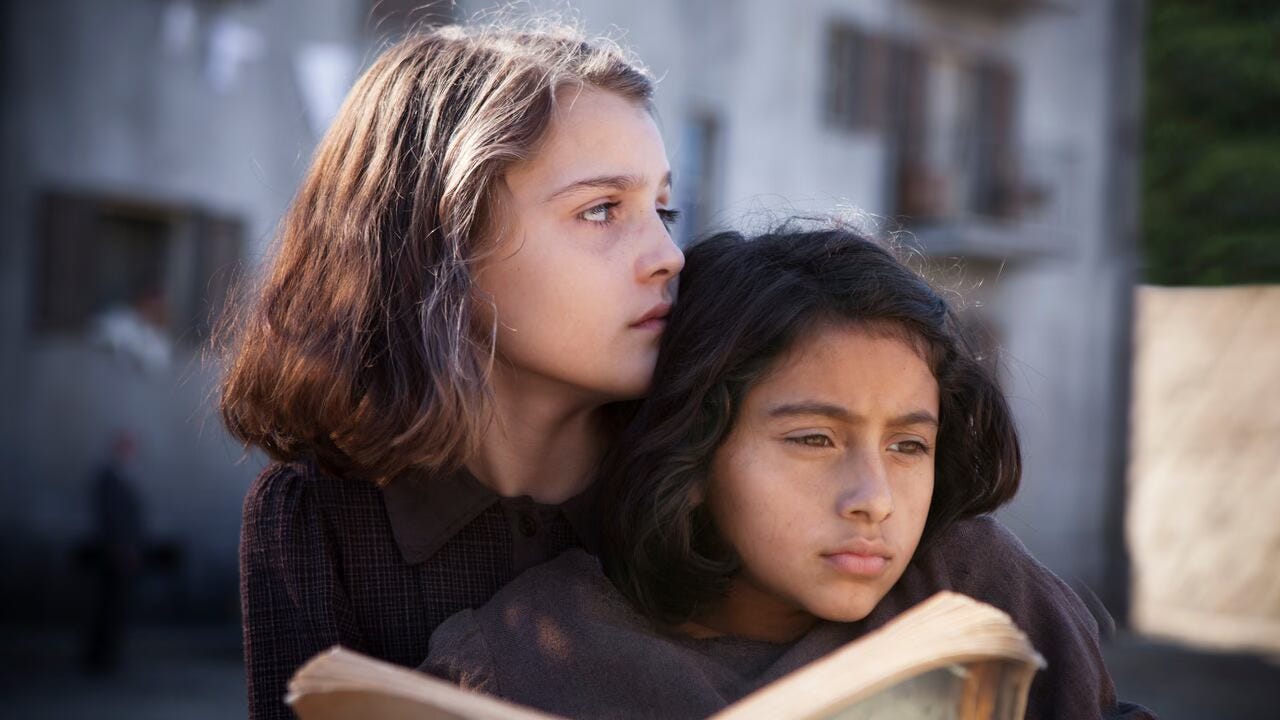
The English translation of My Brilliant Friend, the first novel in the series, was published in 2012, my second year of undergrad at the University of Toronto. And yet I wouldn’t meet Elena and Lila for another five years. I was still so painfully dutiful: always studying, always prioritizing what had been assigned.
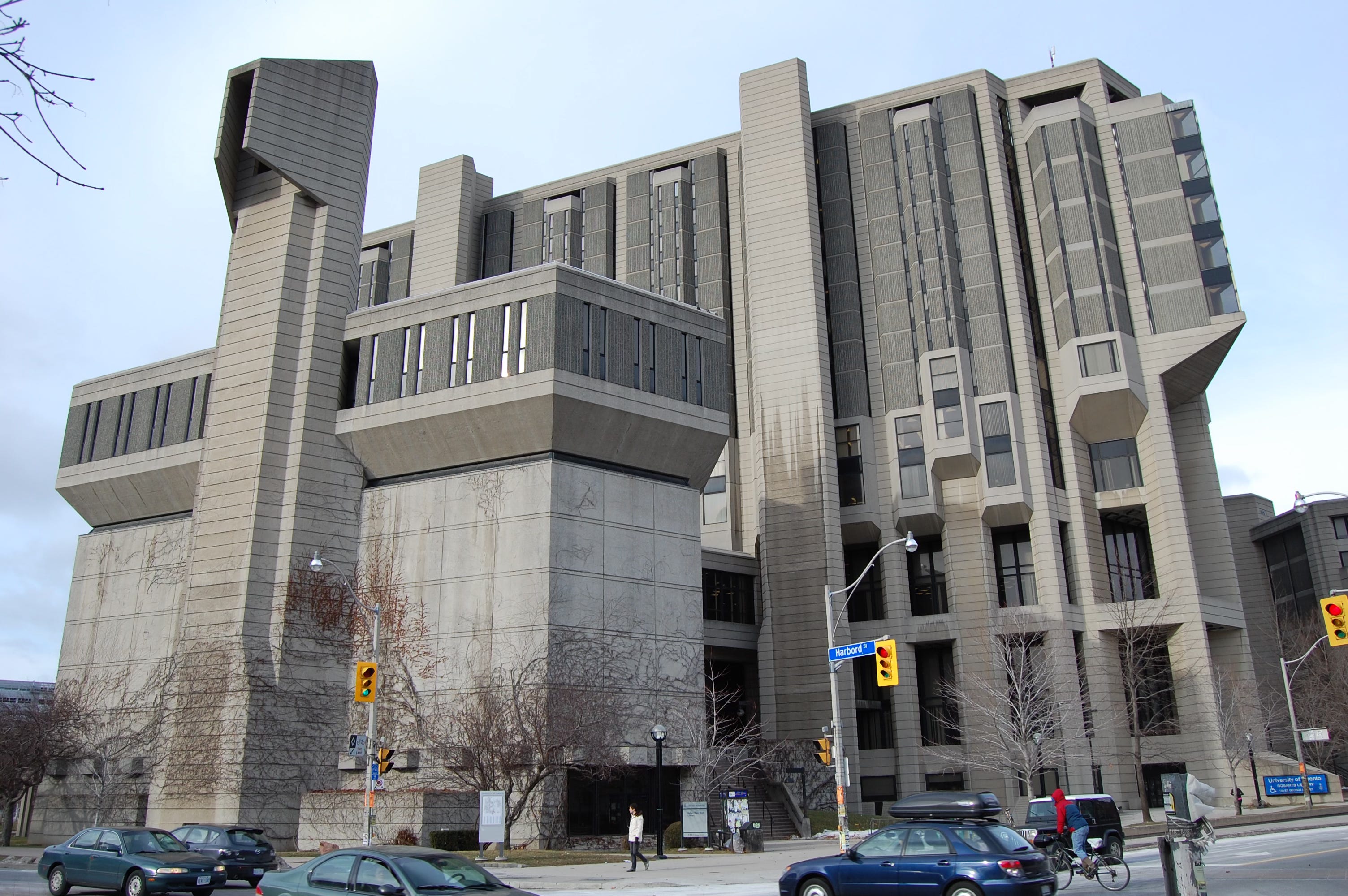
I practically lived at Robarts Library, the boxy gargoyle that hulks over the university’s downtown campus. After dinner, I’d enter the bowels of the building and ascend to the topmost floors, where I’d read late into the night. (At the time, you could rent a cot and take power naps in the stacks.)
A classic example of brutalist architecture, Robarts is aggressively utilitarian. There are no frills: only raw concrete, béton brut. The term was coined in 1952, by the legendary French architect Le Corbusier. Rejecting the neoclassical decadence of the 1930s and 40s, he resolved to bring “truth to materials,” to highlight the natural patterns and imperfections of concrete, steel, and glass.
When Elena finally decides to immortalize her friendship with Lila, her chosen material is paper. An accomplished writer, she is nonetheless haunted by young Lila’s preternatural ability to sculpt a story: “She took the facts and in a natural way charged them with tension; she intensified reality as she reduced it to words.”
Of course, Elena is capable of this, too. Page after page, volume after volume, she recasts their friendship masterfully, brutalistically, revealing its rawest, most essential parts.
And yet the comparison only extends so far. Le Corbusier believed that buildings were “machines for living in”—that they should mirror the functionality and geometric precision of airplanes, ships, and cars. But does anyone truly live in an airplane? There’s a chance I might have taken better care of myself, might have read with more abandon, had Robarts lifted my spirits like a cathedral.
The Neapolitan Novels, on the other hand, are as sublime as they are geometrically precise. I could truly live inside them, and indeed, I have. More marble than concrete, each book is mottled like a body that has lived a full life.
In The Story of the Lost Child, the fourth and final novel, Elena writes:
To be an adult was to recognize that I needed her [Lila’s] impulses. If once I had hidden, even from myself, that spark she induced in me, now I was proud of it, I had even written about it somewhere. I was I and for that very reason I could make space for her in me and give her an enduring form.
Don’t we all need, to some degree, each other’s impulses? My neighbour’s roaring blender, So-and-so’s pink strobe light—as irritating as they are, were they to stop, some part of me would miss them both.
I do miss the woman on the balcony: she must have given up smoking, having long since abandoned her morning post. For a time, I depended on her presence; I’m still not sure why. Our not-quite-relationship was an irresolvable equation: proximity times distance, familiarity times mystery, the uneven integers of every self. “I was I and for that very reason I could make space for her in me.”
Like Elena, I have written about this somewhere, in a poem titled “Self-Portrait as Elena Greco.” And just last week, I learned that the poem has been shortlisted for Arc Poetry’s Magazine’s 2026 Poem of the Year Award!
You can read the poem (or listen to me read it) on Arc’s website. And you can vote for it in the Reader’s Choice category until May 21st. Your support, as ever, means the world. 🖤
Other news and upcoming events:
A reading at Iron Dog Books
Next Wednesday, May 20th, from 7-8:30pm, I’ll be reading alongside Misha Solomon, Estlin McPhee, and Leah Horlick. We’ll be celebrating the publication of Misha’s debut poetry collection, My Great-Grandfather Danced Ballet, out now with Brick Books. We’d love to see you there!
Two free writing workshops
Back by popular demand, I’ll be reprising my workshop Write Like a River twice more this June, at the Central Branch of the Vancouver Public Library. Save your spot on Wednesday, June 3rd, or check back soon for another session on Wednesday, June 10th. Both sessions will run from 6:30-8pm.
A chapbook launch at Cross & Crows
On Saturday, June 27th, from 7-9pm, I’ll be hosting the launch of Andrew French’s latest chapbook Fists You’ve Called Home, soon to be published by Pinhole Poetry. You can RSVP here. And be sure to check out Andrew’s fantastic poetry podcast Page Fright!
Thank you for reading the long middle. If you enjoyed this post, you can support my writing by:
clicking on the heart below, which helps others find my work;
forwarding this post to someone else;
becoming a free subscriber.
"But there is
another woman, watching
us both, who would have me
stay a little longer—so what I am
alone in this moment
may develop. A Polaroid
put on the fridge, then
in a drawer, then discarded."
Your writing transports me, Lauren!
'a small hard kernel of me remains' – wonderful